
Technology · AI · GTM
Where deep tech
meets business.

I work at the intersection of technology and go-to-market — helping companies navigate complex software decisions and thinking out loud about how AI is reshaping the way B2B teams operate.

Let's connect →
Atro Ranta-aho
10+
Years in
B2B tech
5
Sales teams
built from zero
15+
Industries
covered
3
Continents
lived and worked

The best people in technical sales aren't the smoothest talkers — they're the ones who actually understand the technology, can simplify it, and take a consultative approach with their customers. This is how value is added.

I have a Master's Degree in Mechanical Engineering from Aalto University. Spent my early career at Metso managing global supply chains and leading a global team sourcing parts across three continents. I then found the world of software sales and joined Sievo — a B2B SaaS company focused on Procurement Analytics. At Sievo, I built our US presence from scratch to 1/3 of the ARR and later led the company's global Account Management organization. After Sievo, a stint at CybExer Technologies, learning the world of cyber security, building CybExer's SaaS sales from the ground up.

I currently work at Qt Group, where I lead global sales for Software Quality Solutions — working with engineering leaders and decision-makers across industries, mostly on embedded software projects.

My work has taken me to live and work in three continents, and I've been managing multi-national teams located across the world for 12+ years.

"Most companies are either ignoring AI or overclaiming it. The interesting work is in the middle."

I think AI is the most consequential thing happening in technology right now — and that most of what gets said about it is wrong in both directions. That gap is what I find interesting: not the version from the stage at conferences, but the practical, day-to-day reality of what actually shifts starting now.

I come at that from two directions. One is commercial: what AI does to how B2B teams sell, qualify and decide. The other is Physical AI — what happens when the models move off the screen and into cars, robots and machines that have to be safe as well as clever.

The shift isn't about tools. It's about workflow and people. Teams that redesign how they work around AI will outperform the ones that just add AI on top of the old way. The gap between those two groups is already opening up.. and it will not close.

I've spent the last couple of years studying this closely — what the leading teams are actually doing, where the real productivity gains show up, and what separates genuine transformation from expensive experimentation. Some of it I've built myself, mostly to find out where the limits actually are.

Some of what I've learned and created, I will share with you here.

GTC Berlin: AI is moving into the physical world

The car became a consumer electronic — notes from a week in Shanghai

Pörssisähkö — Physical Ticker Device

Few months back i started my vibe coding career with my own website atrorantaaho.com and a web replica of my TI calclulator - now it was time to move on to the heavy lifting and see if I could become an Embedded SW developer overnight. I'm not leaving my day job yet but I can tell you the results are promising! 😉
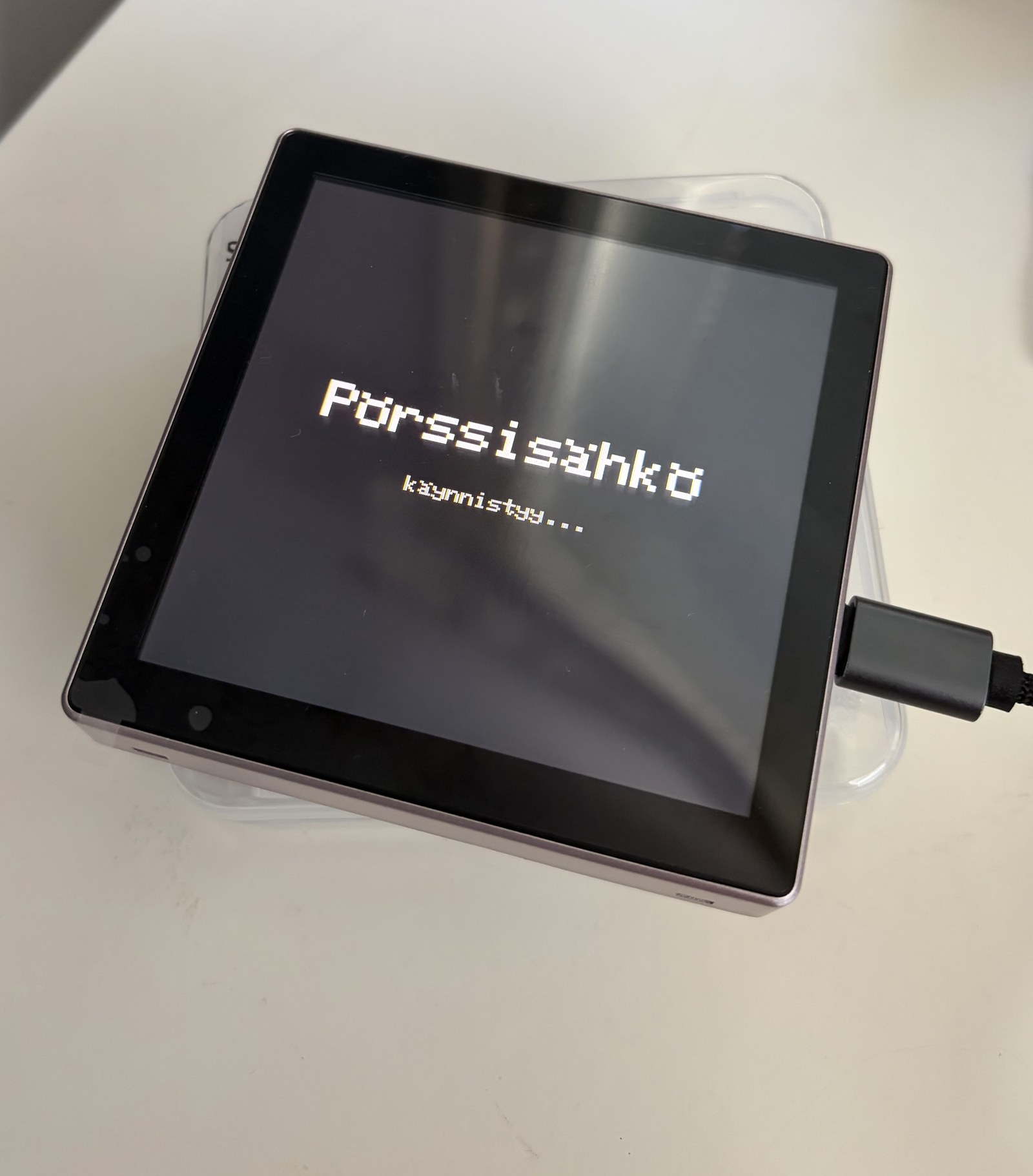
Pörssisähkö device booting up, showing the Pörssisähkö startup screen

I'm excited to introduce you to my latest vibe coding project Pörssisähkö (electricity spot price) Physical Ticker Device. Finland moved to 15-minute spot pricing recently, and I wanted something that just tells me the current price at a glance, no app required.
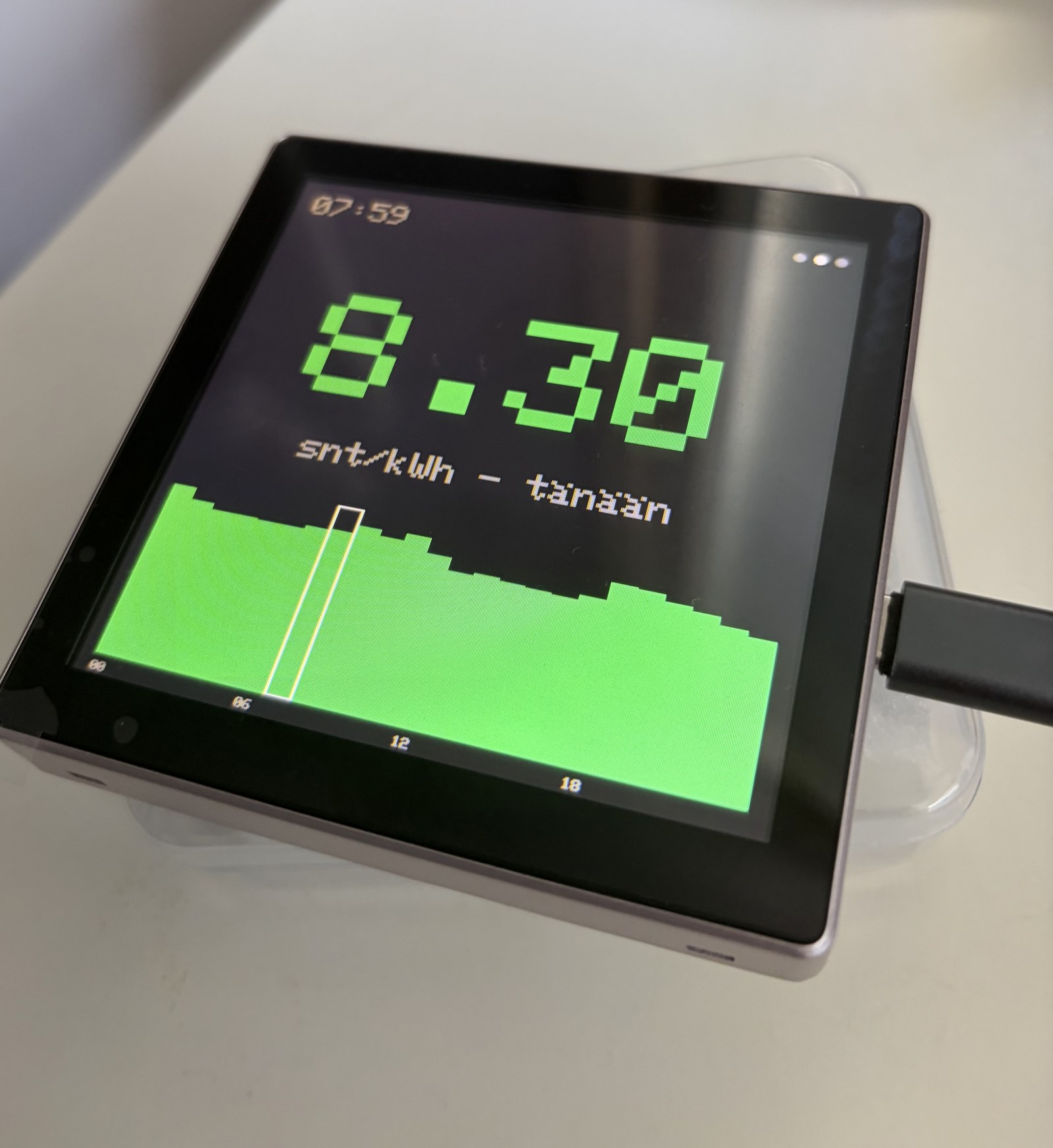
Pörssisähkö device showing today's electricity price and a price chart

Current prototype:

⚡ Board: ESP32-4848S040C-I — an all-in-one module (Guition/Sunton), no breadboard wiring
🧠 MCU: ESP32-S3
🖥️ Display: 4.0" 480×480 IPS (ST7701S), 16-bit parallel RGB
👆 Touch: GT911 capacitive — swipe between Today / Tomorrow / Settings views
📡 Data: spot-hinta.fi's public API, 15-min resolution, fetched twice daily
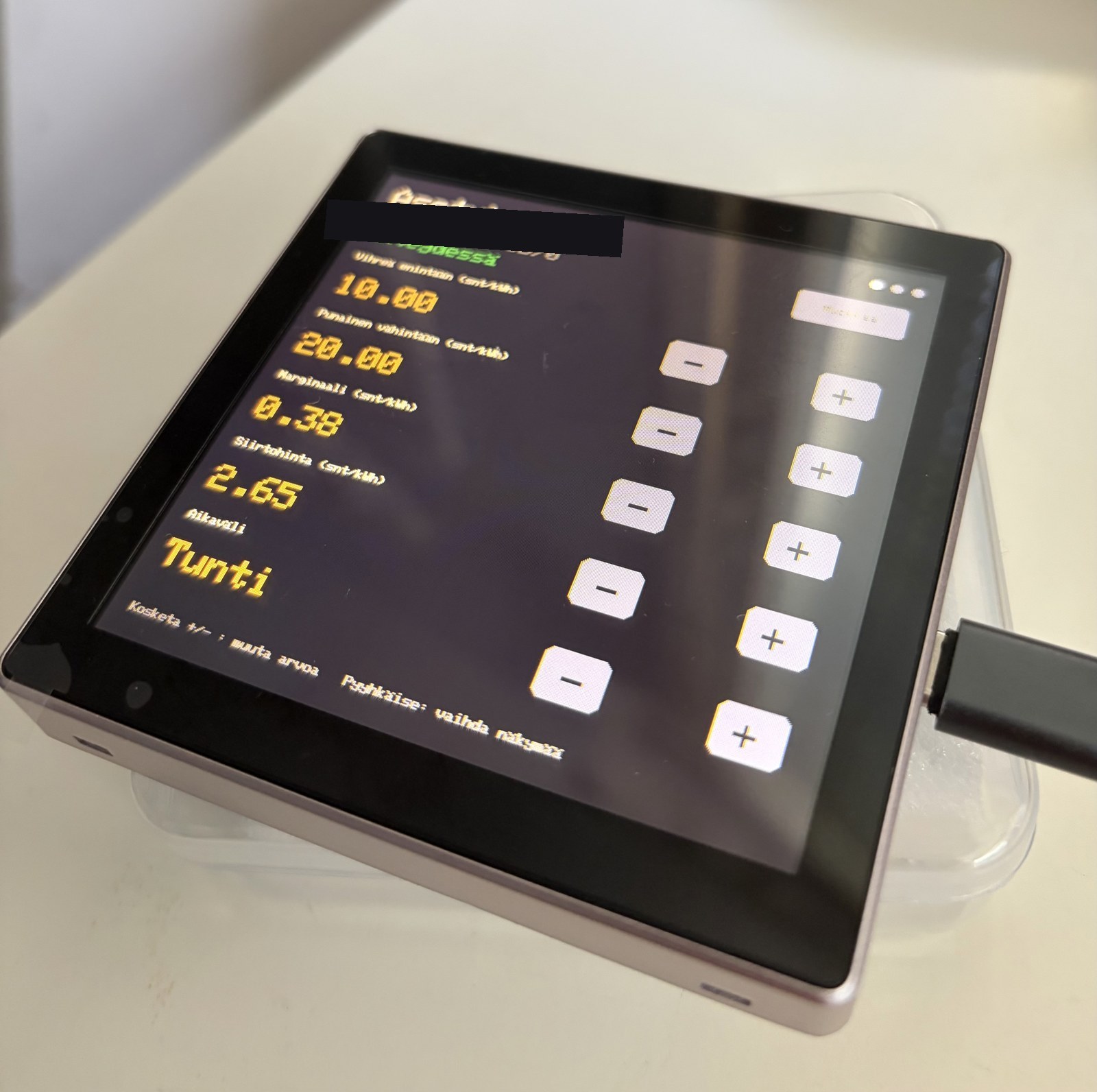
Pörssisähkö settings view with adjustable price thresholds, margin, transfer price, and interval

Everything's rendered with direct drawing calls (Arduino_GFX) — no GUI framework, just immediate-mode graphics on an always-on RGB panel. It's USB-powered for now, which is the obvious next problem to solve. And yes, this HW is an overkill but the integrated ESP modules make it very easy to skip the assembly and focus on coding.

The bottom line: I coded this in an hour — or technically Claude did — with little to no understanding of what "I" wrote. If it isn't mission critical (consumer electronics, say), this approach may well suffice, and the software value-add layer is going to change very fast.

Close ↑

What the NVIDIA HALOS announcement means for the commercial side of Physical AI

Will AI replace traditional Spend Analytics tools?

Vibe Calculator v2 — a TI-86 in your browser

Claude the sales enablement agent

The poor man's Gong — why AI is shaking the SaaS world

Hello World